




The South African Young Wine Show competition is the industry’s first major competition of the year, with the national results preceded by a regional stage. Significantly, it is a competition for wines of the current vintage year – both final bottled versions and tank samples. As such, it is a valuable and unique peer review of its kind not only of quality, but also cutting-edge winemaking techniques, style innovations and pioneer varieties.
At the unveiling of national results on Friday, Diemersdal stood out after being named Shiraz champion for a wine made by winemaker Juandré Bruwer, alongside Groot Phesantekraal’s Richard Schroeder, as producer of the top Chenin blanc.
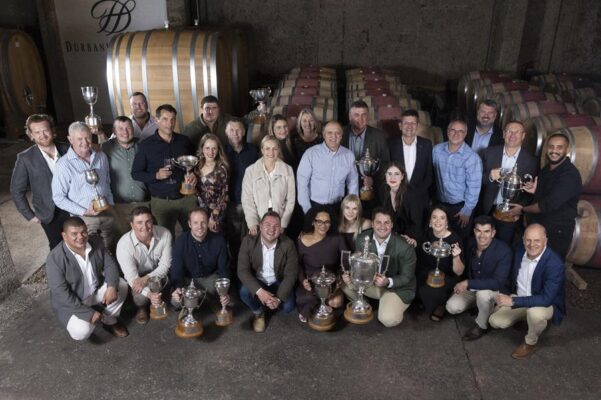
Cape Town’s overall champion was Groot Phesantekraal which was not only awarded the title of Hillebrand Gori Cape Town Young Wine Show Regional Champion, but also won the Vinochem Chenin Blanc Trophy, FS Smith Co White Blend Trophy and SA Litho Sweet Wine Trophy.
Diemersdal also received four trophies: the Laffort SA Cabernet Sauvignon Trophy, Fassbinderei Stockinger Shiraz Trophy, Vicard SA Red Blend Trophy and Cape Cooperage Niche Wine Trophy.
Durbanville Hills followed with three trophies: the Enartis Chardonnay Trophy, TN Coopers Pinotage Trophy and Porex SA Merlot Trophy.
The haul was rounded off by De Grendel, which received the Vinventions SA Trophy for Sauvignon Blanc.
“For many years… as we reflected on our own unique terroir and wine styles, it became increasingly clear that Cape Town has its own story to tell.” Until then, Durbanville had participated in the show as part of the Stellenbosch region.
Once the local committee had received approval from competition owners to create what would become the ninth regional division, the mammoth task of organisation began. Everything – including the setting up of logistics, organising sponsorships and developing a structure – had to be done within two months.
A notable part of this journey involved the sourcing of trophies, which turned out to be one of the highlights. “[The national overseer] Agri-Expo… invited us to choose from their collection,” said Pieter-Niel. “These are not ordinary wine trophies. They carry the history of South African agriculture, with some dating back as far as 1922.”
“We decided to keep that history…replacing only the bases with oak, recycled from KWV staves estimated to be between 250 to 300 years old. These trophies carry centuries of history within them…[and now] we add a new chapter,” he said.
Pieter-Niel furthermore included the division’s gratitude to all the trophy sponsors (as mentioned above) as well as their financial partner, Hillebrand Gori, for their support in making the event possible.
Also speaking at the auspicious event was SA National Wine Show Association chairperson Christo Pienaar, who pointed out that this year is the 194th edition of the competition. He highlighted how a Durbanville cellar – despite competing in another division – has claimed General Smuts Trophy, its highest award, three times over the years.
“Welcome to the biggest wine championship in South Africa…Thank you for taking the initiative to participate as a region,” he said.
This year, the national show drew a total of 1 389 wines from the 2026 vintage, with 93 wineries participating.
Among these, Cape Town entered 117 wines and claimed 96 awards, which means that most wines the region submitted were recognised by the judges. Durbanville specifically produced the two national champions, as well as four class winners (Groot Phesantekraal for wooded Chenin blanc; Diemersdal, in the categories for Shiraz and wooded Shiraz; Durbanville Hills for Merlot) and five gold medals (two for Klein Roosboom and Diemersdal each, and one for Durbanville Hills).
Although it only made up 8.42% of entries in this, its inaugural year, Cape Town – a mid-sized region by submission count – still out-produced larger, more traditional wine areas in absolute award numbers.
Another important reason to note the region’s wines is the spread of recognition, across varieties and styles. Rather than a narrow specialty, Cape Town’s awards display a smooth distribution, emphasising reliable, broad-based winemaking quality rather than a single standout.
The wines on the show were judged by panels of winemakers, Cape Wine Masters, wine buyers, and wine specialists from the trade.
For further information about the excellent wines of this pioneering region, visit the Durbanville Wine Valley Association’s website www.durbanvillewine.co.za